Call (970) 610-0830
CallRequest Estimate

Grand Junction, the Grand Valley, and nearby Western Slope communities asphalt estimate help

Gravel to Asphalt Driveway Conversion in Grand Junction, CO

Request an estimate to convert a gravel driveway, private lane, or rural access road to asphalt in Grand Junction, the Grand Valley, and nearby Western Slope communities.

Clear asphalt paving, repair, and maintenance estimate requests for Grand Junction, the Grand Valley, and nearby Western Slope communities — project details, photos, timing, and location in one place.

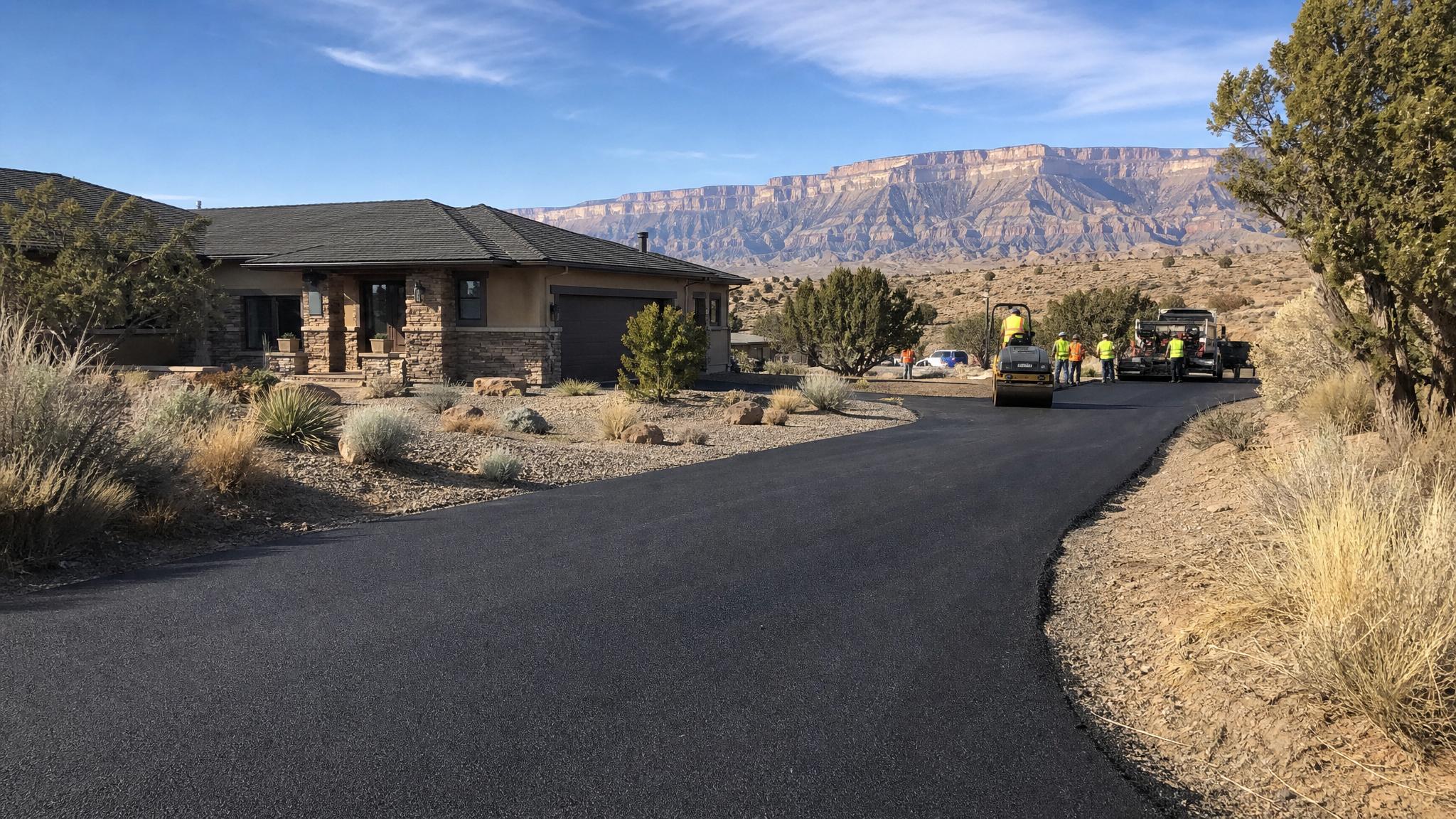
Gravel to asphalt driveway conversion in a Grand Junction area setting
Asphalt paving, repair, resurfacing, and parking lot work across Grand Junction, the Grand Valley, and nearby Western Slope communities.

Grand Junction asphalt paving services

Explore asphalt paving, repair, and maintenance options in Grand Junction, the Grand Valley, and nearby Western Slope communities.

Why property owners convert gravel to asphalt

Gravel driveways and rural access lanes are common across Mesa County, from acreage properties near Loma and Orchard Mesa to orchard and vineyard access roads near Palisade. Gravel costs less to install initially, but it comes with ongoing upkeep: periodic regrading, dust in dry summer months, washboarding under regular traffic, and material that migrates or washes out during heavy rain or spring runoff. Property owners typically consider a conversion when the gravel maintenance cycle becomes more of a hassle than the upfront cost of paving, or when they want cleaner access for a garage, shop, rental property, or daily commute.

What changes when gravel becomes the base for asphalt

A gravel driveway is not simply paved over as-is. The existing gravel is evaluated for depth, compaction, and material quality, since a well-built gravel base can sometimes serve as part of the new aggregate base and reduce cost, while a thin or soft base usually needs regrading, additional aggregate, and re-compaction before asphalt goes down. Low spots and ruts that have formed over years of use need to be corrected so they do not become drainage problems, and any ditch lines, culverts, or informal runoff paths that developed around the gravel driveway should be reviewed before paving locks the grade in place.

Drainage matters more on a conversion than on new construction

Gravel driveways often develop their own drainage pattern over time, sometimes intentionally graded and sometimes just from years of water finding the path of least resistance. Once asphalt is in place, that pattern is largely fixed, so correcting problem areas during the conversion is far easier than after paving. In Grand Junction's climate, standing water against the edge of new asphalt is also a freeze-thaw risk: water that collects at a low point can seep under the pavement edge and, once it freezes and expands through the winter, start breaking down the edge of an otherwise sound driveway within a couple of seasons.

Cost differences between gravel and asphalt over time

Asphalt costs more to install than gravel on a per-project basis, but gravel is not maintenance-free. Ongoing grading, dust suppression, and periodic replenishment of washed-out or compacted material add up over the years a driveway is in use. Property owners comparing the two generally weigh the higher upfront asphalt cost, detailed on the asphalt paving cost page, against the lower but recurring cost of keeping a gravel surface graded and usable. Longer driveways and private lanes, where more information is on the private road paving page, tend to make that comparison more noticeable simply because there is more surface to maintain either way.

Chip seal as a middle option

For long rural driveways and access roads where a full asphalt section may not be necessary, some property owners consider a chip seal instead of either gravel or full asphalt paving. See the chip seal vs. asphalt paving comparison for how that option stacks up on cost, ride quality, and upkeep.

How the estimate process works

Frequently asked questions

Can any gravel driveway be converted to asphalt?

Most gravel driveways can be converted, but the existing gravel base needs to be evaluated for depth, compaction, and drainage first. A soft, thin, or poorly drained gravel base usually needs additional prep before asphalt can be placed over it.

Is the existing gravel reused as part of the new base?

Often, yes. Well-compacted existing gravel can sometimes serve as part of the aggregate base, which can reduce cost compared to a full base rebuild. Whether that is realistic depends on the gravel depth, material quality, and drainage at the site.

Does converting to asphalt cost more than staying with gravel?

Asphalt costs more upfront than gravel, but gravel driveways need ongoing grading, dust control, and material replenishment over time. Property owners often compare the upfront asphalt cost against several years of gravel maintenance when deciding.

How long does a gravel-to-asphalt conversion take?

Base correction and grading typically take longer than the paving itself. A straightforward residential conversion may take a few days once the base is ready, while longer rural driveways or private lanes can take longer depending on length, drainage work, and access.

Do I need to address drainage before paving over gravel?

Usually yes. Gravel driveways often develop informal drainage patterns over time, and those low spots, ruts, or ditch lines should be corrected before paving so water does not pond against the new asphalt or undermine the base.

Conversion details that help produce a real estimate

A useful conversion estimate should note the current gravel depth and condition, approximate length and width, drainage or ditch lines along the route, any culverts, and whether the driveway serves a home, shop, rental, or agricultural property. Photos showing the full length of the driveway, any low spots or ruts, and the transition points at the road and any structures help clarify scope before a site visit.

Request asphalt paving help in Grand Junction

Share the project type, city, timeline, current surface condition, and photos if available.