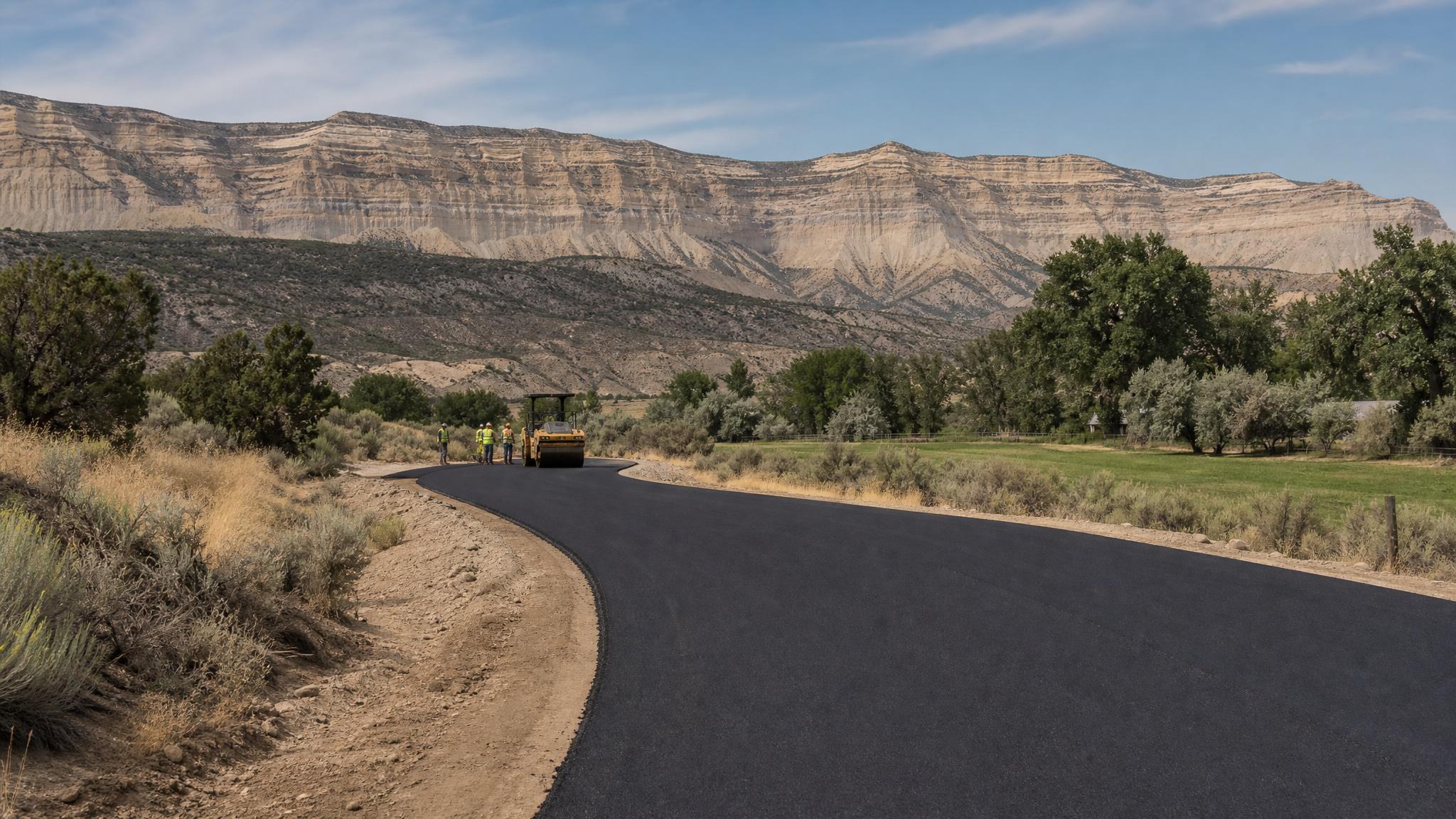
What chip seal is, and how it differs from asphalt
Chip seal is a surface treatment built by spraying a liquid asphalt binder onto a prepared base, then embedding a layer of stone chips into that binder and compacting it. It is not the same material process as hot-mix asphalt paving, which lays a manufactured mix of aggregate and asphalt binder in a continuous, smooth layer. Chip seal is common on rural Western Colorado county roads, ranch access roads, and long private lanes where lower traffic volume and budget make it a practical wearing surface. Full asphalt paving remains the standard for driveways, commercial parking lots, and any surface where a smooth, striped, low-dust finish matters.
Cost comparison
Chip seal typically costs less per square foot to install than asphalt paving, since it uses less material and a simpler application process than laying and compacting hot-mix asphalt. That upfront savings comes with a tradeoff: chip seal generally needs to be resealed on a shorter cycle than asphalt needs resurfacing, so the total cost over many years narrows the gap between the two options. For a full breakdown of what drives asphalt paving cost specifically, see the asphalt paving cost page.
Ride quality and appearance
Asphalt paving produces a smooth, continuous surface that supports clean striping, a low-dust finish, and comfortable ADA access. Chip seal has a rougher texture, and freshly installed chip seal sheds loose stone for a period after application, which can chip paint and is uncomfortable for pedestrians and cyclists. That texture difference is the main reason chip seal is rarely used on commercial parking lots or short residential driveways, where a smooth, easy-to-maintain surface usually matters more than material cost.
Durability against Grand Junction's climate
Both surfaces face the same two climate stresses in the Grand Valley: intense high-desert UV exposure that oxidizes and stiffens asphalt binder, and winter freeze-thaw cycles that force water in and out of cracks and surface voids. Asphalt's continuous, denser surface generally resists water intrusion better than chip seal's more porous, stone-embedded surface, which can let more moisture reach the base over time. Both surfaces depend heavily on proper base preparation and drainage; a chip seal or asphalt surface placed over a poorly drained base will develop problems regardless of which wearing surface is on top. See why potholes form in Grand Junction asphalt for more on how freeze-thaw damage develops.
Where chip seal makes sense
- Long ranch or acreage access roads with lower daily traffic.
- Rural private lanes where budget favors a lower upfront cost.
- Roads that primarily see truck, equipment, or livestock trailer traffic rather than daily passenger vehicles.
Where asphalt paving makes more sense
- Residential driveways and shorter access roads.
- Commercial parking lots that need striping, ADA compliance, and a smooth surface for customers.
- HOA or shared private roads with regular passenger-vehicle traffic.
Property owners weighing the two options for a private or ranch road or a gravel-to-asphalt conversion should factor in traffic volume, budget cycle, and how much they value a smoother, longer-lasting surface against a lower upfront material cost.