Commercial Asphalt Maintenance Grand Junction, CO
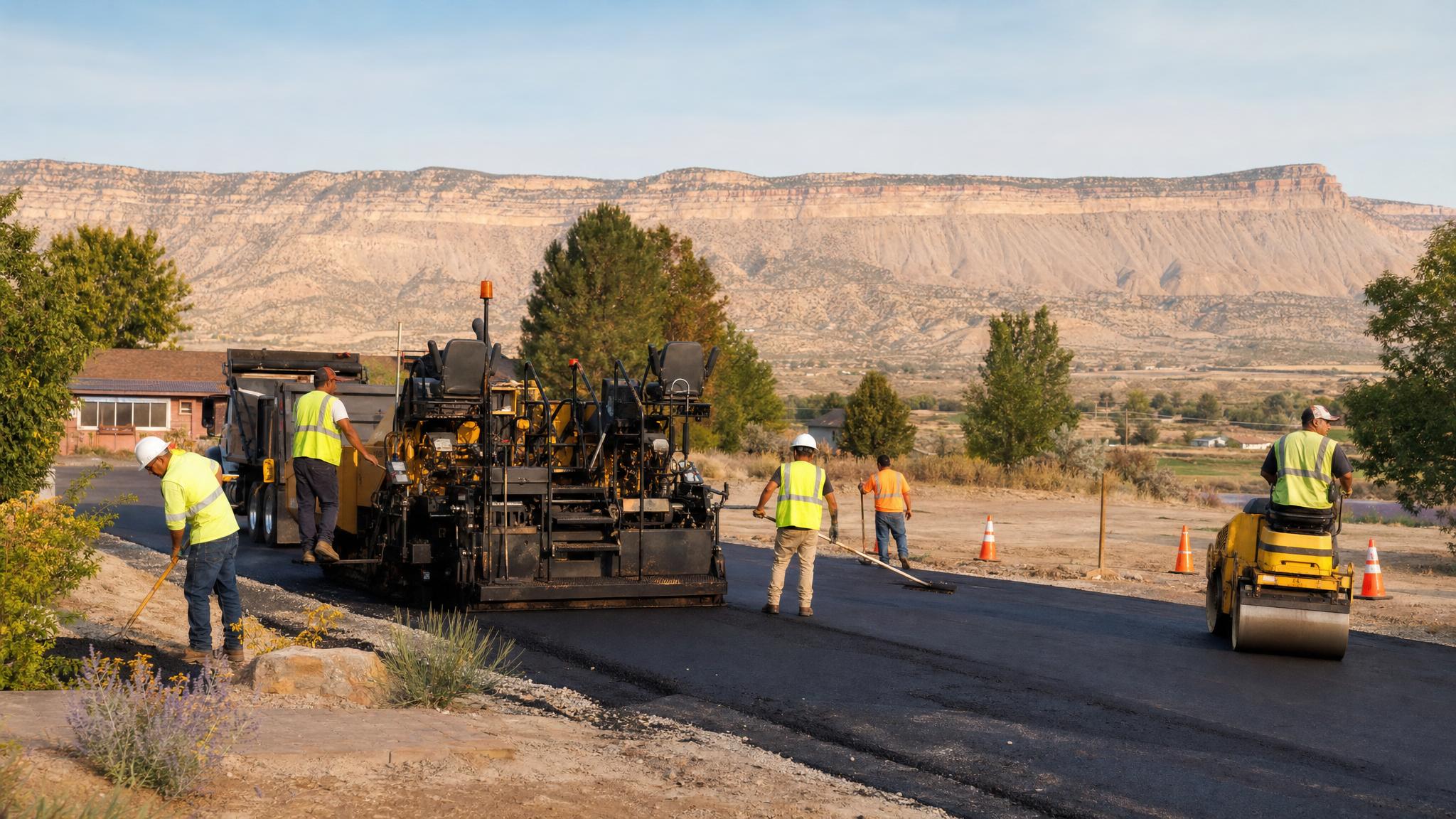
Request commercial asphalt maintenance planning for Grand Junction parking lots, crack sealing, sealcoating, pothole repair, striping, and phased repairs.
A commercial property's asphalt is a maintenance program, not a single job. Combining periodic crack sealing, pothole repair, sealcoating, and striping on a planned schedule is usually less disruptive and less expensive over time than reacting to whichever failure is most visible.
Why Grand Junction commercial lots need a maintenance program
Commercial pavement in the Grand Valley deals with two climate stresses that residential driveways see on a smaller scale. Intense high-desert sun oxidizes and stiffens the asphalt binder across the full exposed surface of a lot, and heavier commercial traffic accelerates the surface wear that follows. Winter freeze-thaw cycles then move meltwater into any crack that has already opened, expanding it every time the water refreezes. A large lot with many small cracks can develop widespread pothole activity faster than a driveway simply because there is more surface area exposed to both problems at once. A maintenance program catches that damage on a predictable schedule instead of letting it surface as emergency repairs.
What a commercial maintenance program typically includes
- Annual or semi-annual pavement inspection and condition notes.
- Crack sealing before cracks widen into potholes.
- Pothole and failed-patch repair for isolated damage.
- Sealcoating on a multi-year cycle to slow UV oxidation.
- Restriping once sealcoat or repairs have cured.
- Drainage review to catch ponding or undersized drains before they undermine the base.
Chip seal, sealcoat, or overlay: budgeting for the right fix
Not every maintenance dollar buys the same result. Sealcoating is the least expensive per-square-foot option and protects a structurally sound surface, but it does not add strength or fix cracking. A chip seal trades a rougher ride and more loose stone in the first weeks after installation for lower material cost, and it shows up more often on rural access roads than on customer-facing commercial lots. A full resurfacing or overlay costs the most upfront but resets the wearing surface and restores structural life once cracking, rutting, or repeated patch failures have gone beyond what a coating can fix. Matching the maintenance budget to the actual condition of the lot, rather than defaulting to the cheapest option every cycle, is usually what keeps a property from paying for the same repair twice.
Scheduling around business hours and tenants
Commercial maintenance work is easier to plan than emergency repair because it can be scheduled around the property's slower periods. Retail centers, restaurants, medical offices, churches, schools, and multi-tenant properties often prefer phased work that keeps part of the lot open, off-peak or after-hours scheduling for the noisiest steps, and advance notice to tenants and customers about temporary access changes. Sharing business hours, delivery windows, and any dates the lot must stay fully open helps a maintenance bid account for phasing instead of assuming the whole lot can close at once.
Seasonal timing for commercial maintenance
Spring through early fall is the workable window for crack sealing, pothole patching, sealcoating, and striping in Grand Junction, since asphalt materials need dry conditions and workable temperatures to cure properly. Late winter is a reasonable time to walk the property and flag what snow, ice, and plowing left behind so the maintenance scope is ready once the weather turns. The parking lot maintenance calendar breaks this down month by month.
Documenting pavement condition for budgeting
Property managers and commercial owners planning multi-year maintenance budgets benefit from a simple condition record: dated photos of cracking, potholes, drainage trouble spots, and any areas where sealcoat or striping has visibly worn. That record makes it easier to compare bids apples-to-apples, track whether a maintenance step is holding up as expected, and decide when a section of the lot has moved from a maintenance candidate to a resurfacing candidate. It also helps separate urgent repairs, such as a pothole in a pedestrian route or fire-lane approach, from lower-risk wear that can wait for the next scheduled maintenance pass.
What to include in the request
Share the service area, property type, timing, access notes, and a short description of what needs to be handled. Clear details make the next step easier.